
No Hot Water? Water Heater Repair for Burbank Homes
Burbank Water and Power reported that the city's water averaged 286 ppm of hardness in 2025, about 16.7 grains per gallon, in its 2025 water quality report. Hard water leaves mineral scale on heating elements and in the bottom of a tank, and scale sits behind many of the no-hot-water, rumbling and short-life complaints. This page covers what fails in gas and electric water heaters, what you can check yourself, when a repair makes sense and when a leak means the heater is finished.
Call (818) 280-4874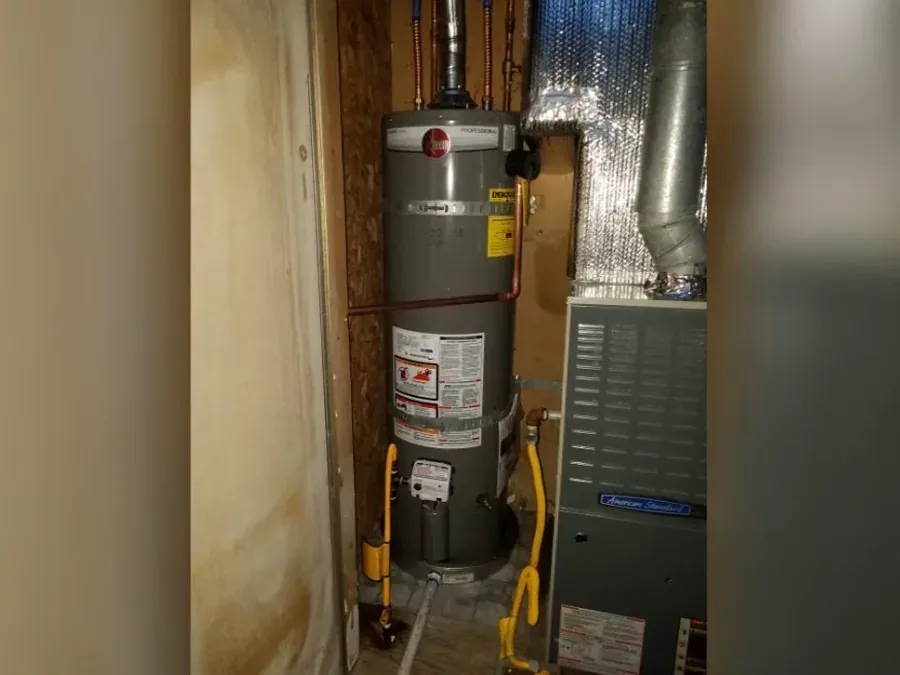
Repair or replace: what age, leaks and history say
The decision turns on three things: how old the heater is, where it is failing and how often it has failed. A part that wears out, such as a thermostat, an igniter or a heating element, is a repair on a heater that is otherwise sound. A leak from the tank body is not repairable, since the steel shell has corroded through, and that means replacement.
Tank heaters often last around a decade, shorter in hard water and with no maintenance, longer with flushing and a working anode rod. If a heater is near that age and needs a major part, the repair quote and a replacement quote deserve a side-by-side look. Ask the plumber to price both so the comparison is explicit, and see the water heater installation page for what replacement involves.
No hot water from a gas or electric heater? Start here
Gas vs electric is the first split, because the two fail in different places and the symptoms look alike while the checks differ.
| Symptom | Gas heater: likely cause | Electric heater: likely cause |
|---|---|---|
| No hot water at all | Pilot out, failed thermocouple or igniter, or a gas supply valve closed | Tripped breaker, tripped reset button or both heating elements failed |
| Water warm, never hot | Dirty burner, weak pilot flame or thermostat set low | One failed element or a thermostat out of calibration |
| Hot water runs out fast | Sediment filling the tank or a failed dip tube | Failed lower element or sediment covering it |
| Popping or rumbling | Scale and sediment under the burner heating and boiling | Scale on elements and in the tank bottom |
| Pilot will not stay lit | Thermocouple wearing out or a draft at the burner | Not applicable |
The right column depends on the fuel, and the plumber confirms it before touching anything. If you are unsure which type you have, look for a gas line and a vent on top for gas, or heavy wiring into the side or top for electric.
What a homeowner can safely check, and what to leave alone
A few checks are safe and sometimes solve the problem. Others belong to a plumber.
- Electric: check that the breaker has not tripped and that the reset button on the thermostat panel has not popped
- Gas: confirm the thermostat is not set to pilot or vacation mode and that the gas valve to the heater is open
- Either: check whether other fixtures lose hot water too, which points to the heater rather than a single faucet
- Leave alone: the gas valve internals, the burner assembly, the relief valve discharge line and any wiring inside the heater
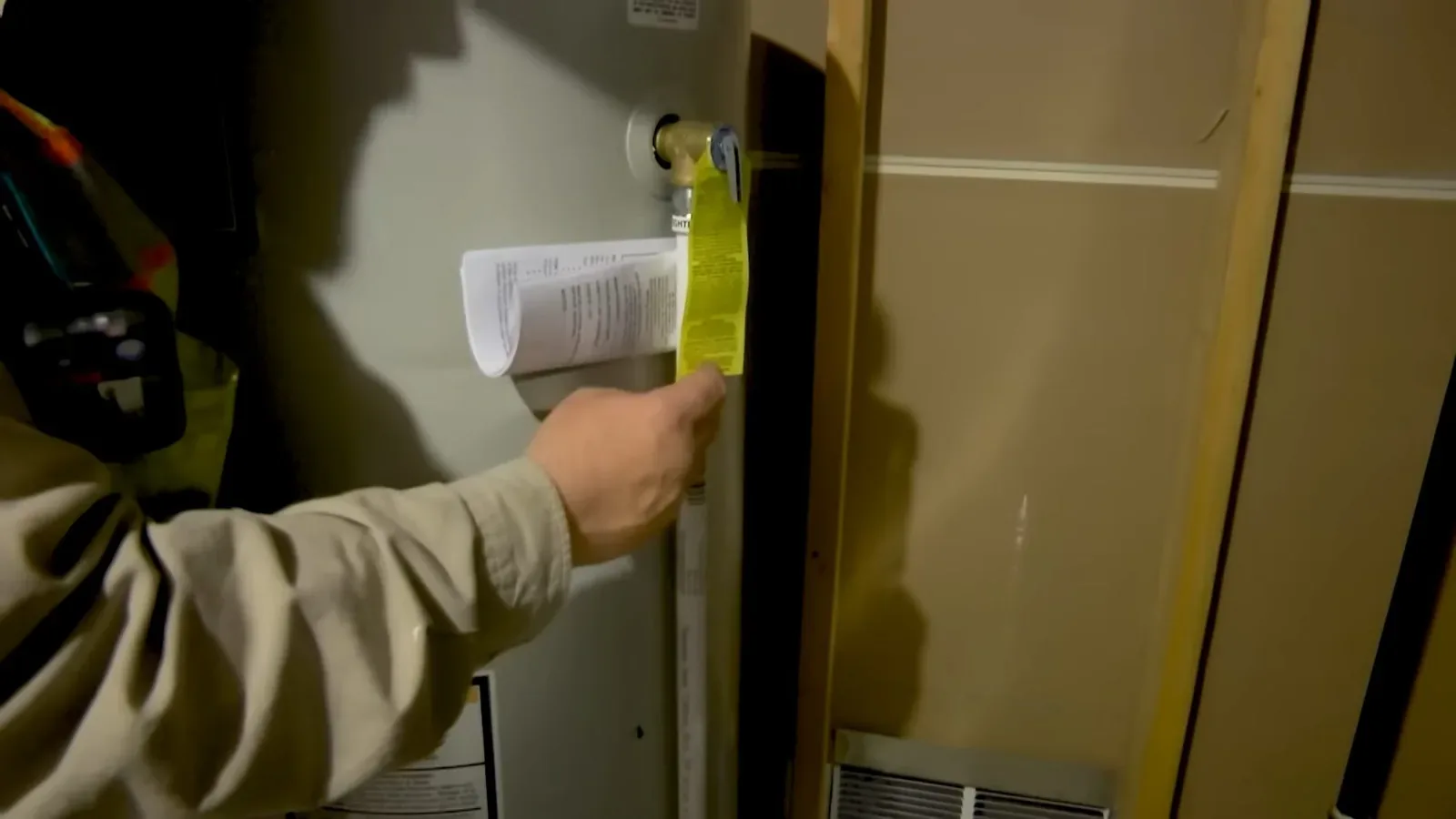
- Never plug or cap the temperature and pressure relief valve line
If a checked item solves it, tell the plumber, since a breaker that trips again or a pilot that goes out again means the underlying part is failing.
Scale from hard water, and what it does to elements and anodes
Minerals precipitate out of hard water as it heats. In a gas heater they collect on the tank bottom under the burner, which insulates the water from the flame, makes the burner run longer and produces popping or rumbling as trapped water boils through the layer. In an electric heater they coat the elements, which overheats and burns them out. Scale also eats the sacrificial anode rod, the part meant to corrode before the tank does.
Water heater servicing, meaning a flush and an anode check, drains sediment from the tank and extends its life when done regularly. Skipping it for years can leave a layer thick enough that opening the drain valve only releases a trickle, which is the reason an old heater is sometimes best left alone. The water softener page covers treating the water itself.
A leaking tank: when a leak means the heater is finished
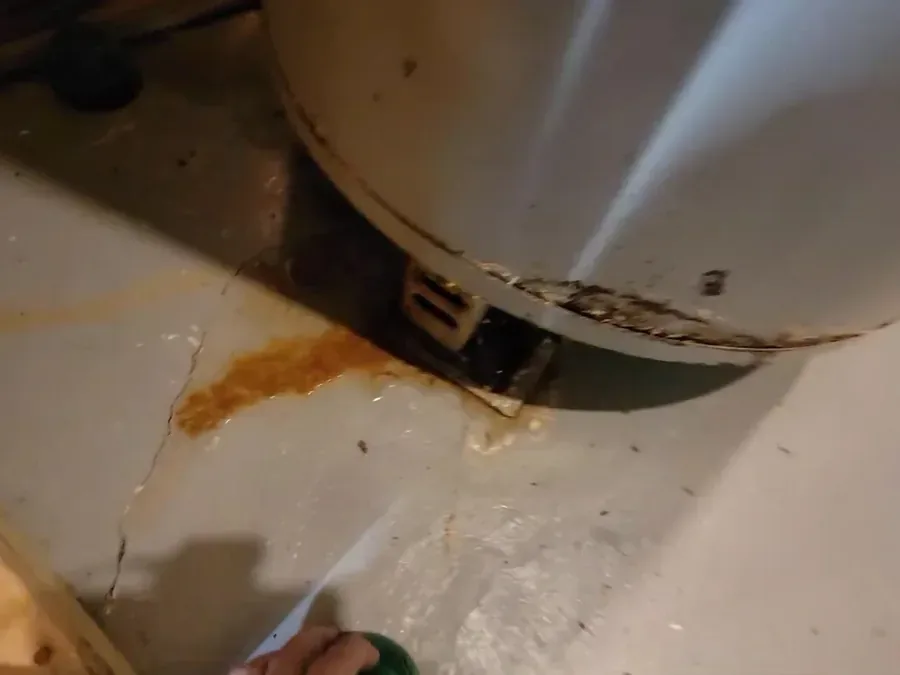
Not every wet floor means a dead heater. A leak at the top can be a loose fitting or a failing supply connection, and a drip from the relief valve discharge line can mean pressure or temperature is too high. Water pooling under the tank body is different. It means the tank is corroded through, and no part replaces a tank.
If you find water, shut off the cold supply valve above the heater, turn off the power at the breaker or set the gas valve to off or pilot, and call. The dispatch line is staffed overnight, so a heater that fails after dark does not have to wait for morning.
Gas smell: leave first, repair call second
A gas heater runs on a pressurized fuel line, so any smell of gas changes the order of operations.
A pilot that smells of gas but is lit should still be treated as a gas leak until a technician says otherwise. A burner that burns yellow, soot on the draft hood or a headache and nausea when the heater runs point to combustion problems, which also need immediate attention.
Bracing, permits and other questions if the heater is replaced
Some jobs that start as a repair end in replacement. In that case, two rules apply that a repair would not trigger.
Parts that fail, and what each one does
Pilot, igniter and burner
The pilot or electronic igniter lights the burner. A thermocouple proves the pilot is lit and holds the gas valve open. When it wears out, the pilot lights and goes out again. A plumber replaces the thermocouple or igniter and cleans the burner.
Thermostat and heating elements
An electric heater uses an upper and a lower element, each controlled by a thermostat. When one fails, hot water runs out sooner or never gets hot. The parts are replaceable on a sound tank.
Noise: popping, rumbling and hissing
Popping and rumbling come from scale and sediment. Hissing can come from a leaking valve, a fitting dripping onto the burner or boiling water through scale. Ask the plumber to find which.
Water heater repair questions
Why is my water heater leaking?
A leak at a fitting, valve or connection can be repaired. Water coming from the tank body means the tank has corroded through and needs replacement. Shut off the cold supply and the power or gas, then call.
Can I get emergency or same-day water heater repair?
Calls to the dispatch line are answered around the clock and the dispatcher passes the job to a plumber covering your area. Availability sets the arrival time, so none is quoted by phone.
How often should a water heater be flushed?
Manufacturers' instructions set the schedule, and many call for flushing at least once a year. In hard water, more often is sensible. A plumber can also check the anode rod during the flush.
How long does a water heater repair take?
A part that is on the truck, such as a thermostat or igniter, can be replaced during one visit. A part that must be ordered, a gas valve or a leak that requires replacement stretches it. The plumber explains which applies after diagnosis.
How long do water heaters last?
Tank heaters commonly last about a decade, depending on water quality, maintenance and the anode rod. Hard water without flushing shortens that. A heater near that age with a major failure is often replaced rather than repaired.
More water heater and hot water services
Cold shower and a heater that will not respond?
Tell the dispatcher whether the heater is gas or electric and where the water is or is not, and a plumber serving Burbank takes it from there.
Call (818) 280-4874