
Faucet, Toilet and Fixture Repair for Burbank Homes
When you call about a toilet that will not stop running or a faucet that drips all night, the dispatcher asks three things: which fixture it is, whether water is reaching the floor, and whether the shutoff valve underneath still closes. The answers decide whether the visit is a quick part swap, a replacement or a leak search. Fixtures are the plumbing people use every day, so this page walks through each one, what usually fails and when replacing beats repairing.
Call (818) 280-4874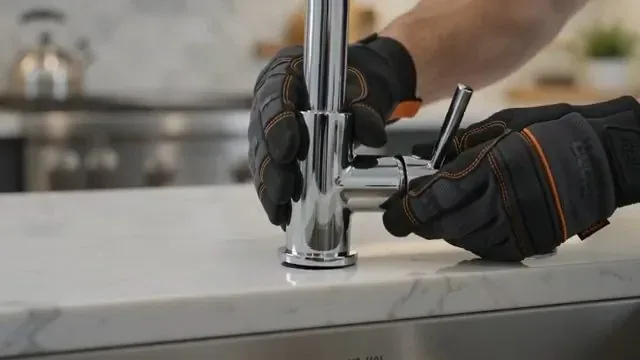
Repair or replace the fixture?
A fixture that works with a new part is a repair, and a fixture that is cracked, corroded or years past its finish is a replacement. A toilet with a worn flapper or fill valve costs little to fix, while a cracked tank or bowl is a different story. A faucet with a bad cartridge is a repair, while one that leaks at the body or has a pitted finish is not worth another cartridge. Ask the plumber to name the failed part and what a new fixture would involve, so the two paths are compared on paper.
| Symptom | Usual cause | Typical path |
|---|---|---|
| Toilet runs or refills on its own | Worn flapper, fill valve or float | Part swap in the tank |
| Faucet drips from the spout | Worn cartridge or seat | Cartridge repair |
| Leak at the faucet base | O-ring or loose body | Seal repair or replacement |
| Toilet rocks on the floor | Loose bolts or damaged flange | Reset with new seal, flange repair |
| Shower drips after shutoff | Failed valve cartridge or stem | Valve cartridge repair |
Age matters less than the fixture's condition and parts supply. An older faucet from a maker that has closed may have no cartridge available, which tilts the decision toward replacement even when the body is sound.
Toilet install and replacement
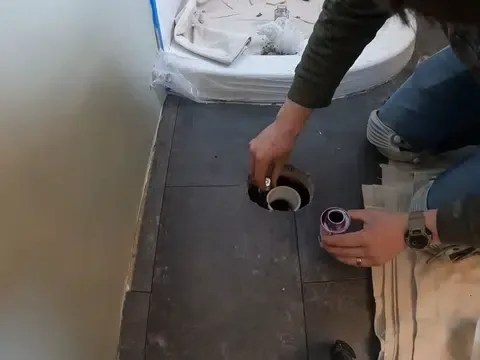
A replacement removes the old toilet, inspects the flange and floor, sets a new wax or foam seal, mounts the new bowl and tank, connects a new supply line and checks for leaks. The flange is the part that gets overlooked. A cracked or low flange makes a new toilet rock or leak no matter how good it is.
Choosing between a standard, an elongated or a dual-flush model comes down to space and water use. Measure the distance from the wall to the closet bolts, the rough-in, before buying, because a 10-inch or 14-inch rough-in will not fit a 12-inch toilet. Moving a toilet to a new spot is a relocation, with drain and vent work, and it belongs to a different scope than a swap.
Running toilet or slow leak: what to check first
A toilet that runs, hisses or refills on its own is wasting water, and the usual cause is inside the tank. Take the lid off and look. A flapper that does not seat, a chain that is too tight or too loose, a fill valve that does not shut off and a float set too high all let water slip into the bowl. To test the flapper, tint the tank water with a little dye, wait fifteen minutes without flushing, and see whether color shows up in the bowl.
If the toilet is clogged and not just running, a plunger with a good seal handles most clogs. A toilet that clogs repeatedly points to a partial blockage in the drain behind it, and the drain cleaning page explains the cable and camera work for that.
Faucet repair: drips, spray and low flow
A dripping faucet is a worn cartridge, valve seat or washer. A faucet that sprays sideways or has low flow is usually a clogged aerator or sediment in the cartridge. A leak at the base is an O-ring or a loose body. These are small parts, but the faucet must be matched by make and model, so the plumber needs the brand or a photo of the faucet.
Faucet install and replacement follow a similar path. Shut off the supply, disconnect the lines, remove the old unit, mount the new one and connect new supply lines. Kitchen faucets with pull-down sprayers and touch features need a bit more room under the sink and sometimes an electrical connection for the touch module.
Kitchen sink: faucet, drain and disposal
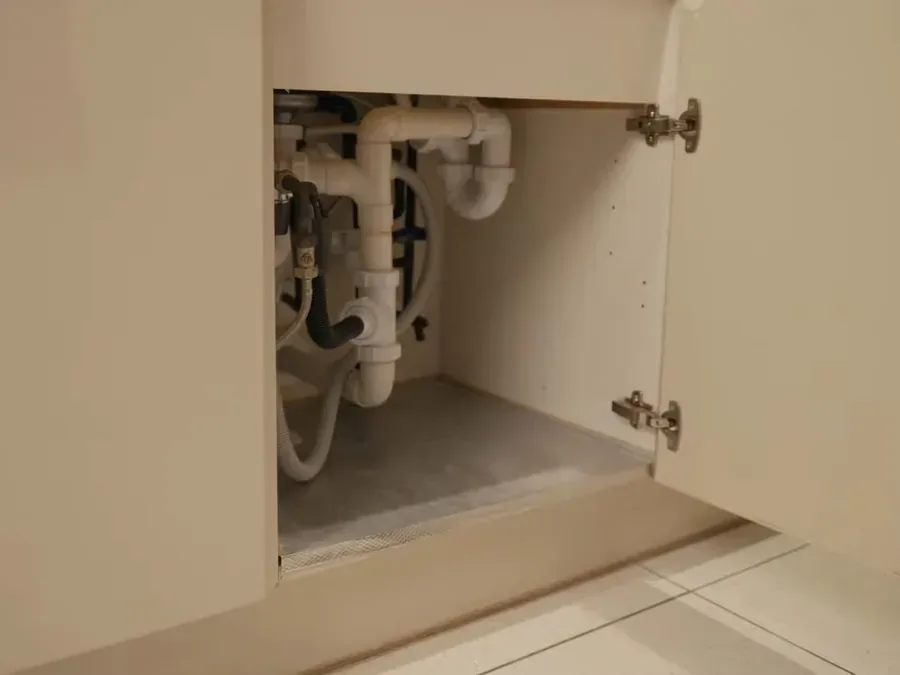
The kitchen sink holds the most plumbing in one cabinet: a faucet, supply lines and valves, the drain trap, often a disposal and a dishwasher connection. A leak under the kitchen sink may come from any of them, which is why kitchen plumbing problems start with drying the cabinet and watching where the water appears. The faucet connections and the drain trap are the usual culprits. A disposal is covered on the garbage disposal page.
If a kitchen sink drains slowly, the clog is usually in the trap or the first stretch of drain, not in the faucet. A plumber clears it from the trap or the cleanout and checks the dishwasher drain connection at the same time.
Bathroom sink and vanity
Bathroom sinks fail at the faucet, the pop-up drain assembly and the supply valves. A pop-up that will not seal or a stopper that sticks is a linkage problem. A vanity cabinet that feels damp or smells musty often hides a slow leak at a supply connection or the trap.
Replacing a vanity or sink is a small remodel. The plumber disconnects the old fixtures, sets the new top and cabinet, reconnects the supply and drain, and checks that valves shut off. A vanity upgrade is also a good moment to replace old supply lines and worn shutoff valves that would otherwise be reused.
Bathtub, shower valve and showerhead leaks
A showerhead that drips, a shower valve that drips from the spout and a tub spout that will not hold back water are three different problems. A showerhead is a washer or a thread seal. A valve that drips after it is shut off needs a new cartridge or stem. A tub spout that leaks at the wall may have a failed diverter or a seal behind the wall.
Water that appears on the floor or ceiling below the shower points to a deeper problem: the valve body, the connections behind the wall or the pan. Moisture behind tile does not announce itself, so the leak detection page explains how a plumber confirms it before tile comes off.
Shutoff valve and supply line condition
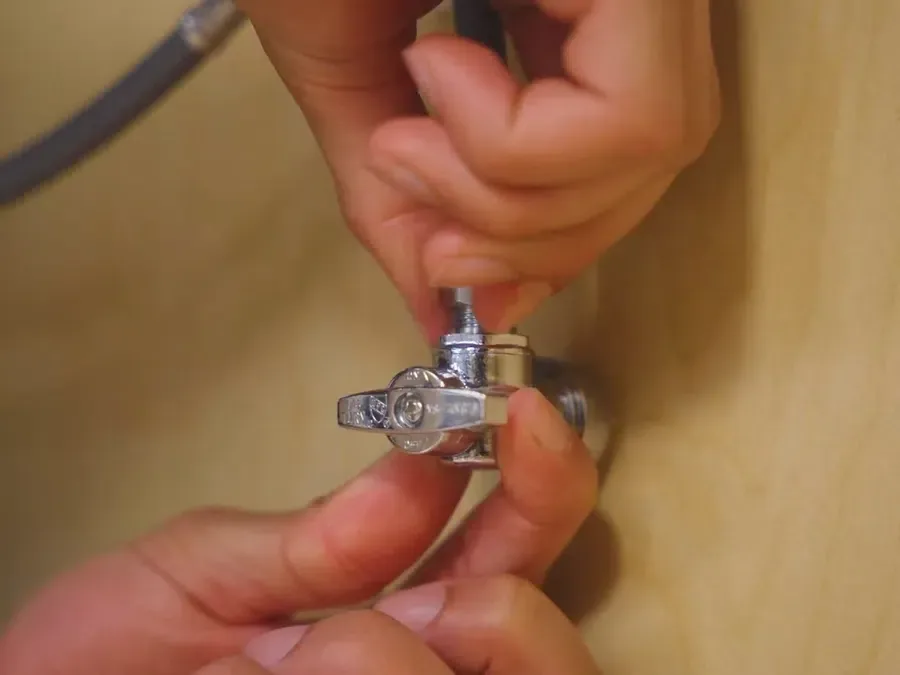
Every fixture should have a shutoff valve under or beside it, and that valve is your first defense. Old multi-turn valves stick, corrode or fail to close, and a valve that will not turn is a reason to replace it before a bigger job starts. Braided supply lines last a long time, but rubber-lined ones can burst, and a line with rust at the nut is due.
Replacing shutoff valves and supply lines takes a few minutes at each fixture and costs little compared to a flooded cabinet. Quarter-turn valves are easier to use in an emergency. Ask for them when a fixture is replaced.
- Valve turns smoothly and shuts the flow fully
- No green crust or white mineral buildup at the valve stem or nut
- Supply line has no kinks, bulges or frayed braid
- No dampness on the cabinet floor or the wall behind
- Manufacture date on the supply line is within about ten years
When a leak under a sink is more than a fixture
Most under-sink leaks are small and local, but a few are not. Water that returns after the connection has been tightened, a stain that grows on the cabinet floor with nothing running, or dampness on the wall behind the cabinet suggest a supply or drain line inside the wall. In an older building, that can be pipe failure and not a fixture problem. The repiping page covers what repeated pipe leaks mean.
Other fixture work that comes up
Washer, dishwasher and ice maker hookups
Appliance hookups need a shutoff valve, a supply line and a drain connection at the right height. A dishwasher plumber adds the valve and a standpipe, or a high loop, so the appliance is connected correctly.
Bidets and toilet seats with a wash function
A bidet seat needs a cold water tee and, for some models, an outlet nearby. The install is small and the plumber also checks that the shutoff and supply line are in good shape.
Tub-to-shower conversions, wet bars and laundry rooms
Bathroom remodeling, a renovation plumbing scope, tub to shower conversion and new construction plumbing all add drain, vent and supply runs and bring a permit with them. A remodeling plumber quotes the rough-in as a project with a stated scope, not as a repair visit.
Outdoor faucets and hose bibs
A hose bib that leaks at the stem or inside the wall is repaired or replaced. A vacuum breaker on the spout protects the house supply from backflow, so ask for one if the faucet has none.
Fixture repair questions, answered
How do I fix a toilet that keeps running?
Check the flapper, chain and fill valve in the tank. A flapper that does not seat or a fill valve that does not shut off is the usual cause. If those parts look fine, call a plumber.
Can a faucet be repaired, or should it be replaced?
A cartridge, washer or O-ring is a repair. A body that leaks, a pitted finish or a model with no available parts points to replacement.
Why is there water under my sink when nothing is running?
Check the supply connections and the trap for slow drips, and feel for dampness on the wall behind. A leak that returns after tightening can be inside the wall, which a plumber confirms.
Do I need a permit to replace a toilet or a faucet?
The City lists fixtures among its counter and online permit items, and older buildings carry a fixtures certificate on plan-check forms. Ask the plumber whether your job needs one.
Nearby services for fixture problems
Fixture leaking or a toilet that will not stop?
Say which fixture it is and whether the shutoff still closes, and the dispatcher hands the job to a plumber for your address.
Call (818) 280-4874