
Emergency Slab Leak Repair for Burbank Houses
The first sign is usually small: a floor that feels warm under bare feet near the kitchen, a faint trickle heard at night with every tap closed, a water bill that climbs while habits stay the same. When supply or drain pipes run in or under a concrete slab, nobody sees the leak, and the damage builds below the flooring until something gives. This page explains how a slab leak is confirmed, located and repaired, and what to ask before any floor is opened.
Call (818) 280-4874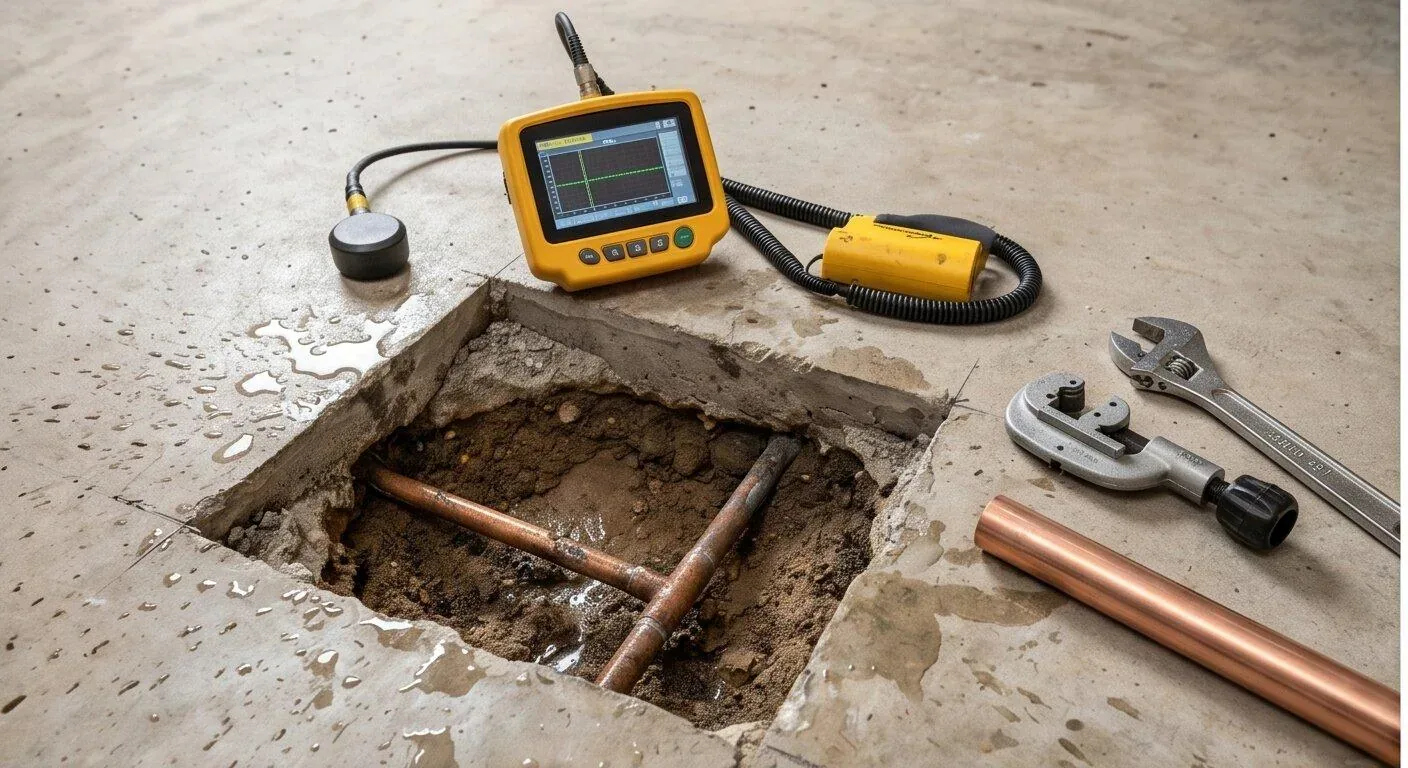
What counts as a slab leak in a concrete foundation?
A slab leak is a leak in a water or drain line that runs inside or beneath a concrete foundation slab. In houses built on a slab, supply lines to the kitchen, bathrooms and water heater sometimes run through the sand bed below the concrete, and drain lines run beneath it. Because the pipes are buried, a failure shows up indirectly: through heat, sound, moisture at the edges, or the meter.
Under-slab leak service is a distinct job from ordinary leak work because the pipe cannot be seen or reached directly. In a house with a basement or crawlspace, basement and foundation plumbing can be inspected from below. Whether a particular house has pipes under a slab is a question for the plumber on site, not something a web page can answer for an entire neighborhood. A visual check of the crawlspace, the garage floor edge, the water heater location and the way pipes enter the walls usually tells within minutes. If a house has a raised floor or a crawlspace, the same symptoms point to ordinary leak detection instead, which is far less invasive.
Spotting a slab leak early: signs it is under the floor, not a fixture
No single sign proves a slab leak, but several together make a strong case. These are the ones plumbers ask about first:
- A warm or hot spot on tile, wood or concrete that stays warm when no hot water is running
- The sound of running or hissing water at night when every fixture is closed
- A meter that keeps moving after all fixtures, appliances and irrigation are shut off
- Water pressure that drops at one or more fixtures without an explanation
- Damp or discolored carpet, curling flooring or cracks in grout lines on a slab floor
- A musty smell near baseboards, or drywall that feels damp low on a wall
- A hot water bill spike, or a water heater that runs far more often than before
A warm floor is the most specific of these because only a pressurized hot line can heat concrete. Any one of the others can have an ordinary cause, so the list is a reason to test, not a diagnosis.
Slab leak detection in Burbank: how the spot is pinned down
Detection narrows the search in stages. The plumber first confirms the leak is on the supply side and not in a fixture, then isolates hot from cold, then listens and measures to find the spot. Cutting concrete at a guess is the mistake to avoid, since a wrong opening costs a floor and still leaves the leak.
| Method | What it shows | Limit to know |
|---|---|---|
| Pressure test on isolated lines | Which line (hot, cold or a branch) is losing pressure | Says which pipe, not where along it |
| Acoustic listening with ground microphones | The loudest point of a hissing leak along the floor surface | Background noise and thick slabs can blur the reading |
| Thermal imaging | A warm trail across the floor where a hot line leaks | Works best on hot lines; floor coverings can mask the pattern |
| Moisture meter readings | Dampness at slab edges, baseboards and under flooring | Shows where water appears, which can be away from the source |
| Meter and shutoff test | Whether the building as a whole is leaking | Does not locate anything on its own |
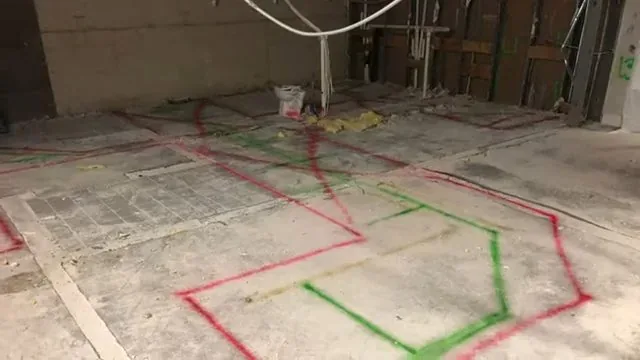
Findings are most reliable when two methods agree. A plumber who marks the floor and explains which instruments pointed there is giving you the ability to question the result, which is the point.
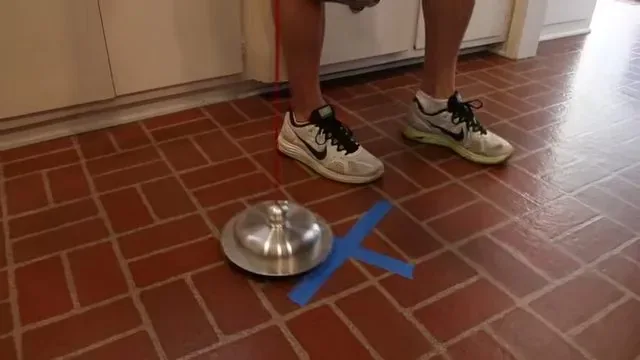
What a homeowner can check, and what that check cannot prove
Two simple tests help before a visit. First, the meter test: with every fixture off, a moving dial means water is escaping somewhere. Second, a hot-only test: close the valve on the cold supply to the water heater and see whether the dial slows. A slowing dial points toward the hot side of the house, which fits a hot line under the floor.
Neither test locates the leak, and neither separates a slab leak from a leak in a wall, a crawlspace or the yard. Treat them as a way to describe the problem accurately on the phone, not as a substitute for the instruments described above.
Slab leak repair when the floor is warm or the bill keeps climbing
Once the spot is confirmed, repair methods differ mainly in how much of the house is disturbed. The plumber can break the slab directly over the leak and replace a short length, tunnel beneath the slab from outside the footprint, reroute the line through walls or the attic and abandon the buried pipe, or line the existing pipe from inside with an epoxy coating. Each has trade-offs in cost, finish work and how long the repair is expected to last.
The right choice depends on the pipe material, the number of leaks, the flooring and where the line runs. Ask the plumber to explain why one method suits this house over the others, and what will need rebuilding afterward, such as tile, baseboards or cabinet bases. Urgent leaks can be reported to the dispatch line at any hour, and the dispatcher cannot name an arrival time until a plumber accepts the job.
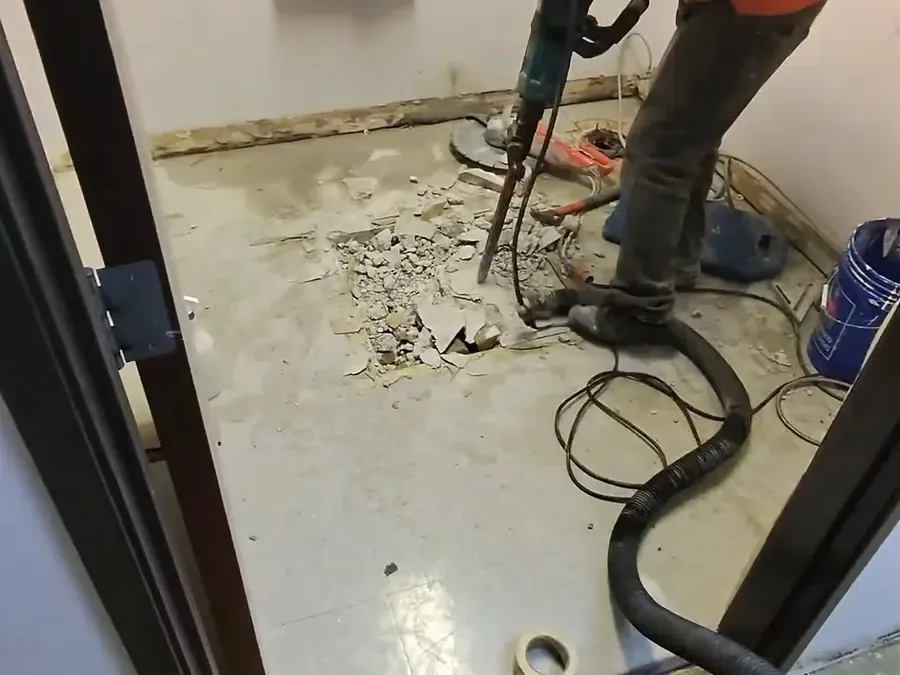
Spot repair, reroute or repipe after repeat leaks
A single leak in an otherwise sound line is a spot repair. A second leak in the same line within a short time is a different signal: the pipe is wearing out along its length, and fixing leaks one at a time can mean cutting the floor again. At that point a reroute through the walls or a whole-house repipe deserves a quote alongside the spot repair, so the comparison is on paper.
What to ask the plumber to document before any floor is opened
- The instruments used and what each one showed
- A marked floor plan or photograph of where the opening will be and how large
- The pipe material and condition at the leak
- Which repair method was chosen and the reasons for it
- What finish work is and is not included, such as flooring and baseboards
- The permit status, when new pipe replaces old
Insurance deserves a mention here. Policies differ on whether the cost of reaching a leak under a slab is covered, and the policy wording and the insurer decide, not the plumber. A written report with location, method and photographs is the paperwork an adjuster may ask to see, so request it before the floor is closed.
Permits when concealed pipe is replaced
Reaching and fixing a leak and replacing concealed pipe are not the same in the City of Burbank's eyes.
When a slab leak is an emergency
Water appearing on top of the floor, a sudden loss of pressure, a hot line leaking enough to feel the heat or a meter spinning fast are reasons to close the main valve and call. Whether the need is an emergency or a same-day visit, the first step is the same: our dispatch line picks up at any hour and sends the call on to a plumber serving Burbank.
Questions that come up at the opening
Will the floor have to be opened?
Often, yes, though how much varies. Rerouting through walls or attics avoids cutting the slab, and lining the existing pipe can limit openings to access points. Detection first means the opening, if there is one, is small and in the right place.
What if the leak turns out to be a drain and not a supply line?
Drains beneath a slab leak differently: no pressure, so the sign is damp soil, odors or repeated clogs rather than a spinning meter. A camera inspection tells which, and the sewer line repair page covers what follows.
Who restores the flooring afterward?
Plumbers repair the pipe and close the opening, and flooring is usually a separate trade. Ask in advance whether patching the concrete is included and who handles tile, wood or carpet.
Slab leak questions, answered
What are the symptoms of a slab leak?
The usual ones are a warm spot on the floor, the sound of running water with everything off, a climbing water bill and damp flooring or baseboards. Several together are stronger evidence than any one.
Does homeowners insurance cover a slab leak?
It depends on the policy. Coverage for the cost of reaching the pipe differs from coverage for the damage the water caused, so read the wording or call the insurer, and keep the plumber's written findings.
How do I know whether I have a slab leak or a different kind of leak?
A plumber confirms it with a pressure test and listening gear. A raised floor or crawlspace usually points away from the slab, while a warm floor and a moving meter point toward it.
Do I need a plumber for a slab leak, or can I fix it myself?
A buried leak cannot be reached or confirmed without equipment and, for most repairs, a permit and licensed work. What you can do is shut the water off, run the meter test and describe what you found.
Work that often goes with a slab leak
Warm floor or a meter that will not stop?
Report it to the dispatcher now rather than after the next bill. A plumber serving Burbank can confirm whether the leak is in the slab.
Call (818) 280-4874